Lighthouse
The Bond Lighthouse is our space to share and explore ideas—a dedicated hub where all our Bond VIPs can dive deeper into the cutting-edge technology that makes the Bond Ring so powerful.

Wilder Intelligence
Updated June 29th
The pinnacle of wearable advancement needs intelligence that can handle the fidelity of data the Bond Ring pushes out. We're releasing a Wilder Intelligence preview this week for all founders — and it will eventually be available to everyone with Genome PRO.
Wilder Intelligence is the world's most powerful AI for technical research — light years ahead of anything like ChatGPT or Claude. We'll be sharing video demos later this week walking you through the interface and capabilities.



Aug 4
Visit us at CES 2026 to experience the Bond Ring at our experience Bond Ring at our booth, no. 53615. We will also be presenting the Bond Ring evé, Bond Ring Diamond, and Bond Ring Stealth at the event.

September 10
With the app design complete, we are now actively developing apps for Android and iOS. We’ll have another update once they go live. We will also be shortly creating a Bond Ring app walkthrough video later in September to dive into some of the groundbreaking features of the app.


July 2
Back in May, we brought the entire Bond Ring app feature set to the web to collaborate more closely with our VIPs and make it even more capable. Look how far we’ve come—share your suggestions and help us make the experience even better!
Aug 5
(Some information was recently hidden due to IP. Will be visible later in September)
Wilder Vitals from Light 1 (WVL1) is our custom light chip with 3 light sources built down to the wafer. The ground breaking multiple patent pending solution is at least a decade ahead of any PPG system used in consumer or medical wearables/vital sign sensors.
NEW VITAL SIGN POSSIBILITIES
The WVL1 Light chip in the Bond Ring unlocks the possibilities of Blood Glucose, Stress levels, Body Hydration, Anti-oxidant index, while dropping power consumption down to 20 times lower than the best of the best in the consumer space. The SNR (Signal-to-Noise Ratio) reaches levels so high that Bond Ring can sense vitals up to 20x faster while consuming the same power as any other PPG-based device on the market without being affected by skin color or which finger you wear the ring on.
PACKING ALL LIGHT COMPONENTS IN A SINGLE CHIP
All other consumer products out there depend on discrete LEDs and PDs. The solution is cost effective and requires zero development cost. Technically speaking, it's more like using a stadium light (LEDs) to read a textbook (your finger) via a mirror(s) (Photodiodes) places at a different location(s). Now if the textbook moves, you really cant read the book via a mirror! That's the reason PPG devices can't sense HR well while the user is moving (motion artifacts). We knocked it out of the park by combining the Photodiode and the light source in a single chip by placing them so close (50 microns) that Bond Ring can sense all PPG vitals irrespective of the activity the user is performing.
DIAMOND LENSES
The high refractive index diamond optics allow us to bring the beam spread down to 10 degrees without placing a cheap, chunky silicone lens. And since the lens is made of diamond, we're not worried about it getting scratched. The extremely focussed beam eliminates the 'stadium light' effect, focusing light exactly where it is needed, further dropping the power consumption by a factor of 2.
A NEW LIGHT
The addition of 1450nm and 1550nm wavelengths is a game-changer for wearable vital-signs monitoring technologies that come at substantial cost. After discussions with a host of clinics and professionals we regularly consult, we decided to take the leap. This upgrade brings the retail price of Bond Ring all the way up to $2,499 by mid 2026.
540nm
540nm wavelength focuses on detecting Heart Rate and computing Heart Rate Variability from the signal data.
660nm & 940nm
660nm works alongside 940nm to penetrate deeper into the skin and gather information on Blood Oxygen (SpO2).
1450nm
The world's first wearable featuring the 1450nm light source. This enables Bond Ring to precisely estimate body hydration levels.
1550nm
The world's first wearable featuring the 1550nm light source. This wavelength penetrates deeper into the skin and works in combination with other wavelengths to estimate the Blood Glucose trends.
These four new wavelengths allow estimation of cortisol levels, antioxidant index by measuring skin carotenoids.
Our patent-pending custom photodiode (PD) design, built into the chipset, dramatically reduces sensor footprint and the wasted light since the sensor and the light sources are very close to each other.

Aug 5
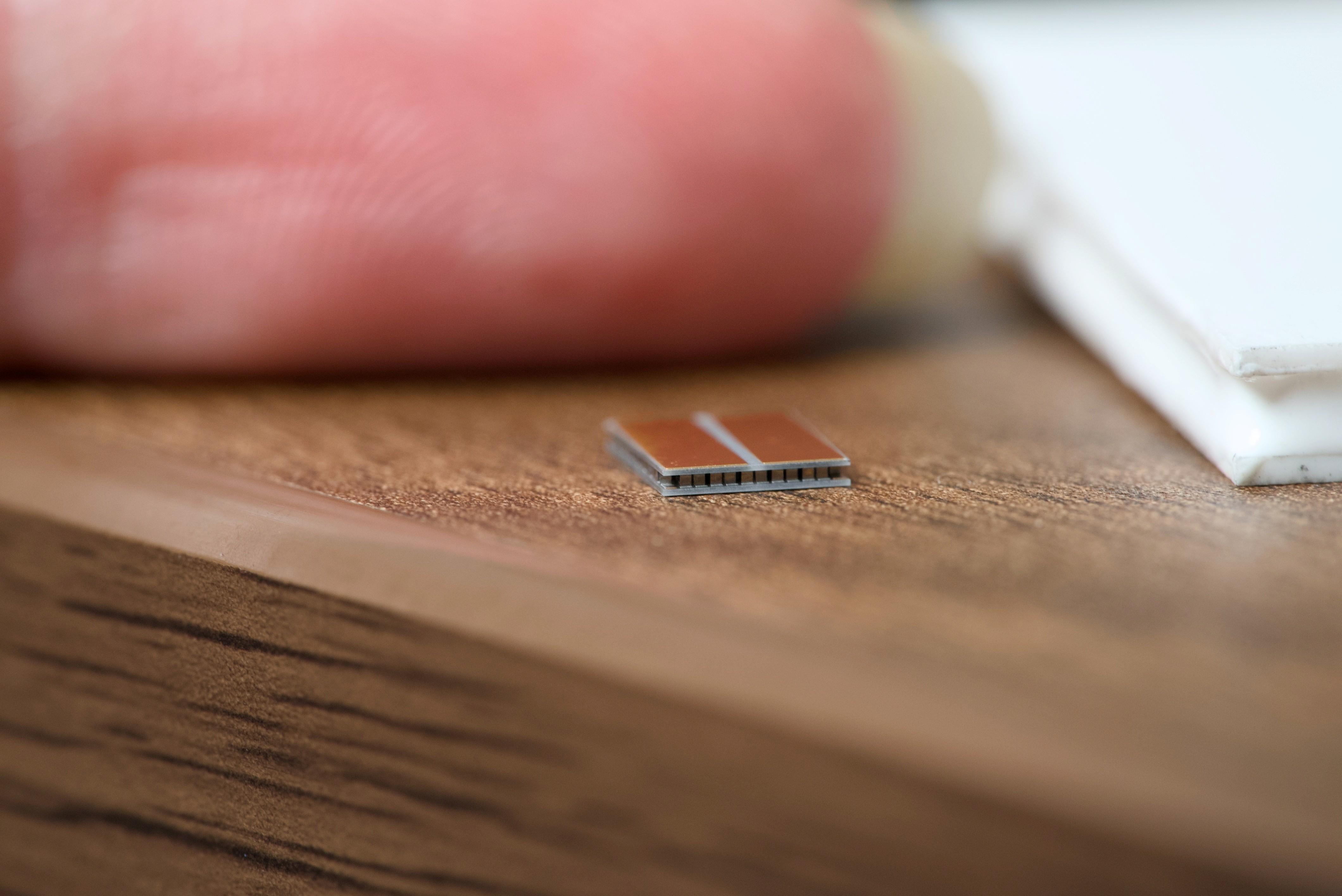
Thanks to near 3000 W/mK thermal conductivity of lab-grown diamond and
custom chemistry chiplets, we managed to squeeze the TEG sector of the Bond Ring down to 0.42mm in thickness-while increasing power generation per unit area to at least 2x of any other commercially available solution.
The TEG module still remains one part of the LifeDrive system. What's more? Stay tuned for LifeDrive's second update, planned for Q4 2025.